Interior designers: how can your website attract premium projects?
Attracting suitable projects begins with making your contribution understandable. An interior design website should show outcomes, explain the work behind them and prepare a useful first conversation. Discover how to connect your portfolio, services, process and enquiry form without reducing your positioning to photographs of spectacular decoration.
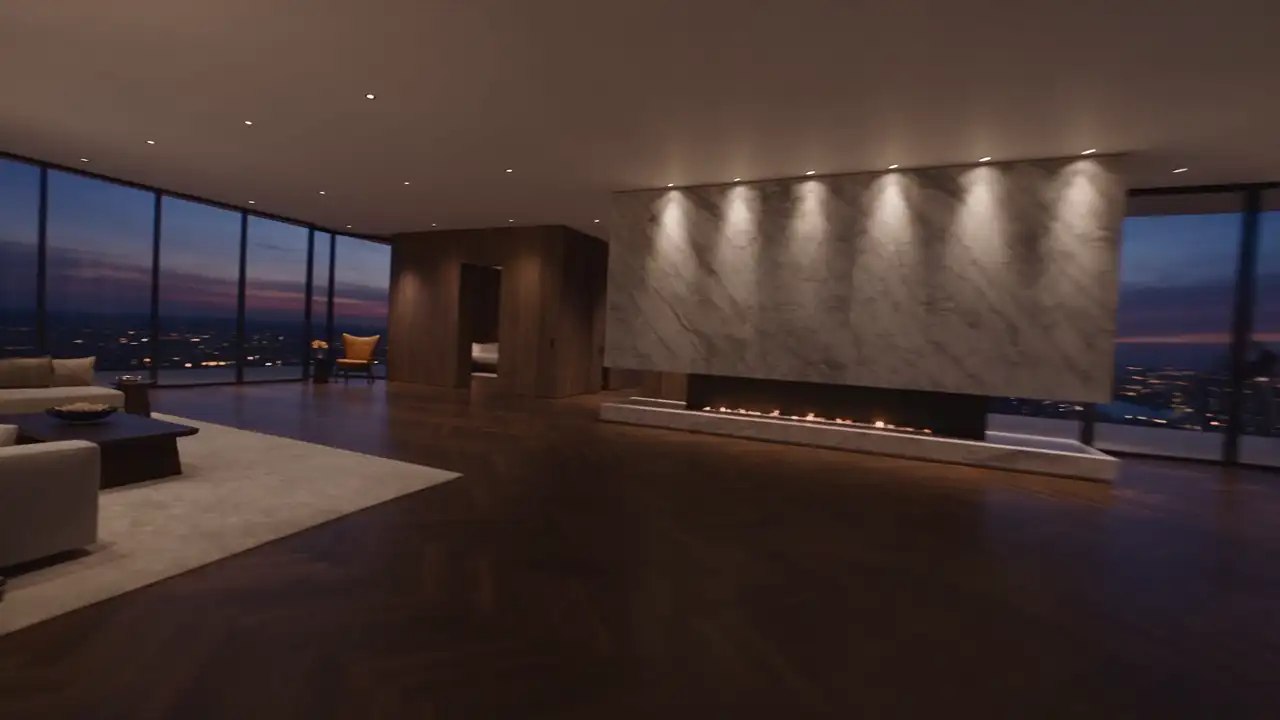
A visitor can admire your interiors without understanding why they should appoint your studio. Photographs show an atmosphere, but they do not always reveal the extent of your role, the decisions involved or the coordination behind the result. That gap can generate enquiries far removed from the commissions you want to develop.
To attract premium projects through your website, make your value understandable before trying to impress. Prospective clients should recognise a situation similar to theirs, understand your contribution and know how to begin. A considered positioning depends on this coherence more than the presence of expensive materials on screen.
Define the projects that suit your studio
“Premium” does not adequately describe the work you want. A complete main residence renovation, a holiday home interior and the transformation of a hospitality space can require different skills and organisation. Be specific about the commissions that genuinely fit how your studio operates.
Write a profile of the desired project: property type, scope, level of customisation, location and client availability. Include the constraints you can address and those outside your offer. These points will guide which pages you need and which completed interiors deserve the most prominent positions.
The intention is not to publish a list of exclusions. It is to explain your scope positively. “Designing the whole interior, from spatial organisation to finish selections” communicates something concrete if it reflects your work. A vague statement about prestige does not provide the same understanding.
Ask someone outside your profession to review the home page and describe what they could commission. If they mention only decoration when your contribution is broader, explain that contribution more clearly. If they imagine services you do not provide, correct that ambiguity as well before expanding the portfolio.
Show the decisions behind the result
Your portfolio should offer more than a succession of finished rooms. For each selected project, choose a challenge a future client can understand: adding storage without crowding a room, separating uses without closing spaces, reorganising an entertaining area or bringing greater coherence to a home.
Explain the starting problem, your response and its observable effect. A finished photograph may sit beside a simplified plan or joinery detail. Readers then discover a line of reasoning, rather than a decorative recipe they might try to reproduce without appreciating the work involved.
Consider a fictional apartment with a generous living room, little storage and an entrance opening directly into it. The presentation could explain how an integrated element organises arrival, accommodates practical functions and preserves a view. This tells visitors more about the studio’s role than several adjectives about the elegance of the finished space.
Avoid turning the page into a complete technical dossier. Choose documents that help a client decide. A complex drawing without explanation can lose a non-specialist reader. A simplified diagram showing circulation may be enough, with an opportunity to discuss the details during a later conversation.
Present your services and their boundaries
A prospective client needs to distinguish what they are considering: an initial study, overall design, help with selections or a more extensive appointment. Use names that match your actual services and explain them in everyday language. Do not assume visitors understand the distinctions between professional stages.
For each offer, identify the need it addresses, what is produced and how the client participates. Also state which elements are defined after reviewing the project. Bespoke work does not have to be obscure: its scope can be understandable even when fees and timing still need discussion.
A tiered presentation may help, provided it does not invent standard packages that your studio does not use. You can distinguish a focused intervention from a comprehensive approach when both genuinely exist. Visitors can then request the right conversation without choosing alone between services whose implications they do not yet understand.
Watch for images that unintentionally broaden the promise. A kitchen, garden or facade appearing in a photograph does not automatically mean your studio designed every element. State your role and relevant contributions. Precision prevents expectations that may otherwise become difficult to correct after the first meeting.
Explain the process so collaboration feels concrete
Discerning clients are considering more than a creative vision. They also want to know how decisions will be prepared, discussed and approved. Present your usual process without turning it into a guaranteed schedule for every property, brief and possible client situation.
Describe initial definition, proposal development, selections and subsequent stages according to your actual offer. Explain the question each stage resolves. “Agree a layout that suits daily life” gives a client more to understand than a sequence of professional phase names presented without context.
Show how you gather requirements. Do you use conversations, site visits and existing documents? How are preferences explored? What happens when members of a household express different priorities? Answer from your actual working method, without suggesting that your process eliminates every disagreement or difficult decision.
Explain how major choices are presented. Samples, drawings and visualisations can help clients compare options when you genuinely use them. The website should communicate an organised relationship while leaving room for the particular character of each commission and the questions that arise during it.
Make quality visible without relying on familiar luxury signals
Black backgrounds, gold accents and words such as “exclusive” do not establish positioning by themselves. In interior design, quality can be shown through a well-photographed material, a carefully resolved junction, balanced proportions and an exact explanation of how a space is used.
Choose a visual direction that gives the work room. A restrained palette and readable typography may serve a richly detailed interior better than a dominant interface. A studio whose approach embraces colour can choose a stronger identity while still keeping navigation and practical information clear.
Give smaller elements the same attention: captions, credits, button states and form messages. Visitors develop an impression throughout the entire visit, including when they seek an ordinary practical detail. A confusing contact page interrupts the continuity of an otherwise carefully considered presentation.
Movement can be useful when it explains a transformation or relationship between spaces. It remains optional. If available media cannot support a convincing sequence, a stable photographic composition may make a better first version and leave a clearer route for future additions.
Provide useful guidance before asking for commitment
Prospects often need to know where you work, which properties you handle and what the first conversation involves. Gather these answers close to service descriptions and contact options. Avoid scattering them across several pages or withholding them until a telephone conversation has begun.
For budget, explain the factors affecting your appointment rather than inventing a universal amount. Floor area alone does not describe complexity: existing conditions, number of spaces, customisation and expected involvement can all change the work. Publish figures only when you have defined them and can explain their scope.
If a minimum project threshold is part of your commercial policy, state it clearly and make sure it matches the work you actually accept. Do not leave a large villa photograph to communicate this information indirectly. A smaller home can present a suitable brief, while a large property may fall outside your offer.
Discuss timing without an automatic promise. Distinguish studio availability, design work and the other stages involved in a project. The website can explain that a schedule follows a review of the context while identifying which documents help make that discussion useful and reasonably concrete.
Design a form that prepares the conversation
Collect information that helps you direct the first exchange. Property type, location, nature of the request, current stage and contact details offer a starting point to adapt. A free-text field lets visitors explain what matters to them beyond your predefined categories and assumptions.
Do not require a complete dossier immediately. Some people already have drawings; others are contacting you precisely because they do not know where to begin. Make optional information clear and provide a suitable way to share documents when the conversation justifies doing so.
After submission, the displayed message should confirm what happened and describe the real next step. Do not advertise a response time your organisation cannot maintain. Test an incorrect field or interrupted submission too: visitors should understand how to recover without losing everything they wrote.
Collected information then needs an owner and a follow-up process. A well-designed form does not improve the handling of enquiries by itself. Assign someone to review, direct and respond to requests, so the experience established by the website continues into the human conversation.
Assess whether enquiries fit the work you want
Do not judge the website solely by the number of forms received. Read the requests: do they match desired commissions? Do prospects understand your contribution? Which questions recur despite the explanations available? These observations reveal ambiguity that traffic totals alone cannot identify.
For illustration, a studio might receive many requests for furniture selection when its practice focuses on comprehensive renovations. Before seeking more traffic, it should examine the order of its projects, the names of its services and the information placed near the contact invitation.
Change an identifiable element and observe subsequent conversations. A clearer service page or better-explained project may be more useful than a complete redesign. Avoid attributing every change to the website: referrals, seasonality and commercial activity may also influence the types of request you receive.
As a next step, choose one completed interior that genuinely represents the commissions you want and check whether its page explains your value. MV Design can help you explore a website that connects this evidence, your working process and an enquiry journey consistent with your studio.